Showers
Shower Door Buying Guide: Frameless vs. Semi-Frameless vs. Sliding
Choosing a glass shower door comes down to four decisions: the style of door, the thickness of the glass, the hardware finish, and the layout of your shower. Get those right and the door looks good and works well for decades.
This guide walks through each decision the way our technicians talk homeowners through it at a consultation, with photos from real American Screen & Glass installs.
The four shower door styles at a glance
| Style | Glass | Look | Best for |
|---|---|---|---|
| Frameless | 3/8" or 1/2" tempered | Clean, no metal around the door | Walk-in showers, remodels, a high-end finish |
| Semi-frameless | Thickness matched to system | Metal frame on the fixed panels, open door edges | A cleaner look at a lower price than frameless |
| Framed | Thickness matched to system | Metal frame around every panel | Budget projects, older bathrooms |
| Sliding (bypass) | Framed or frameless | Panels slide past each other on rollers | Tubs and bathrooms without room for a swinging door |
Our shower enclosures use tempered safety glass.
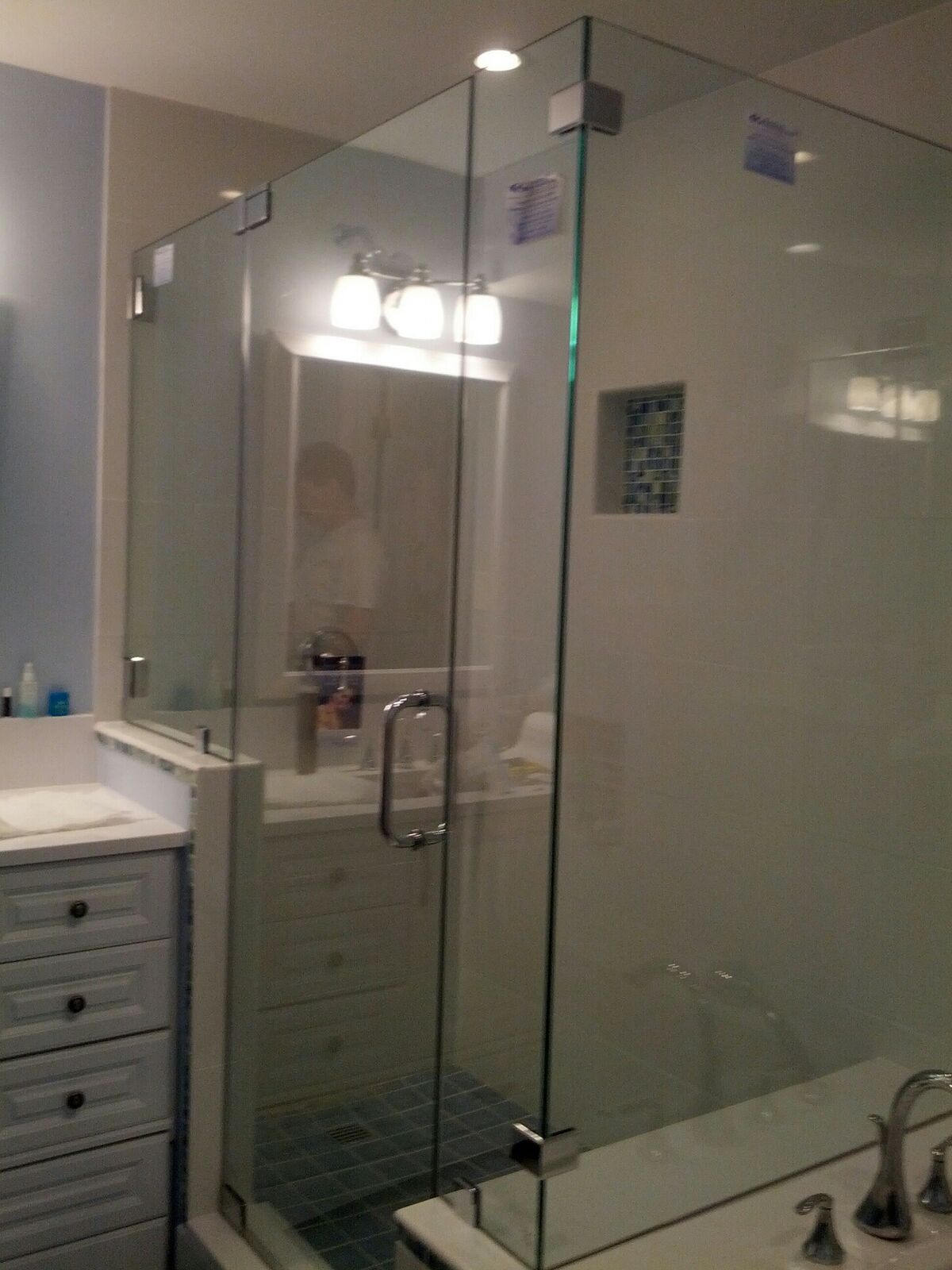
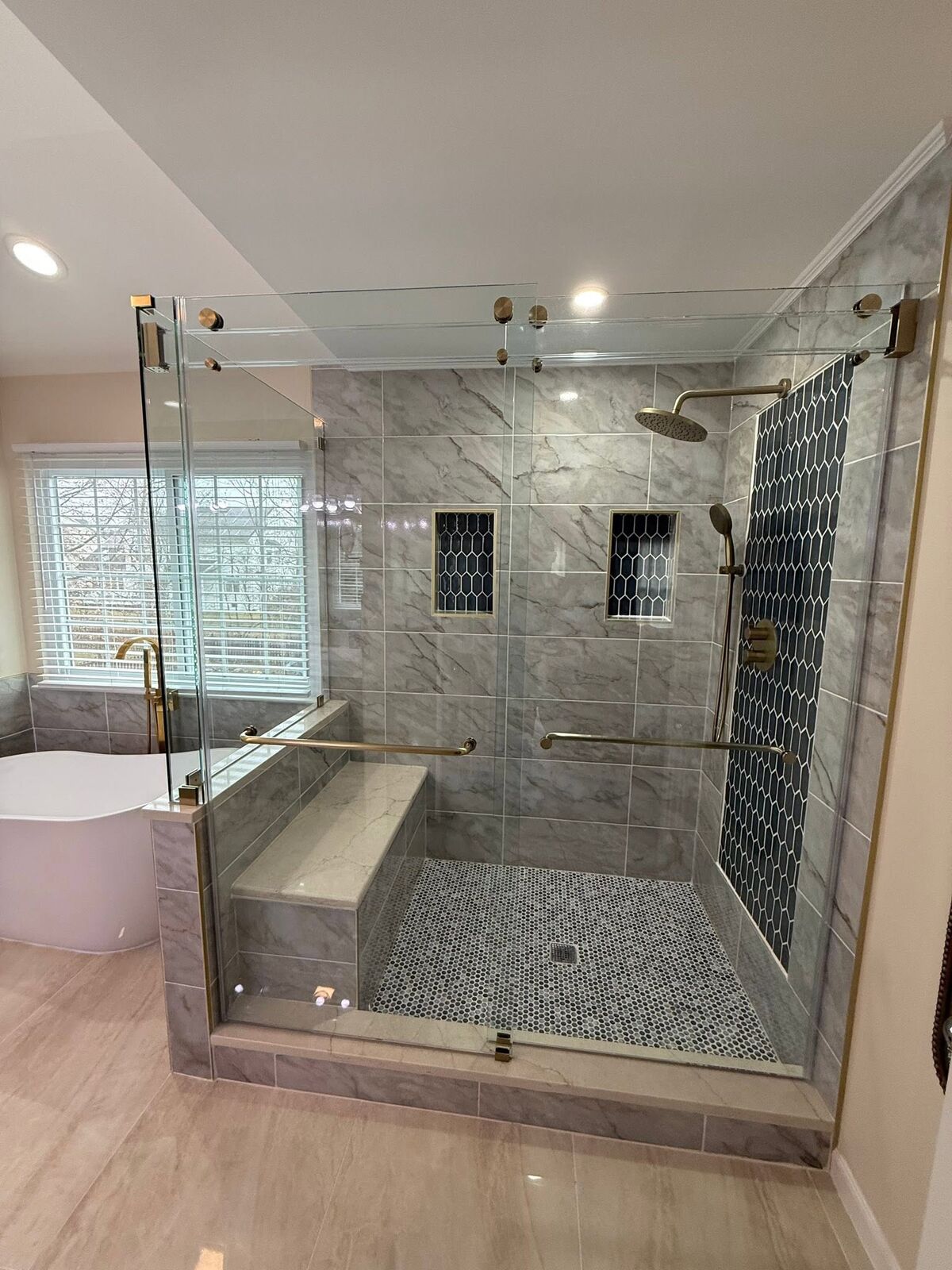
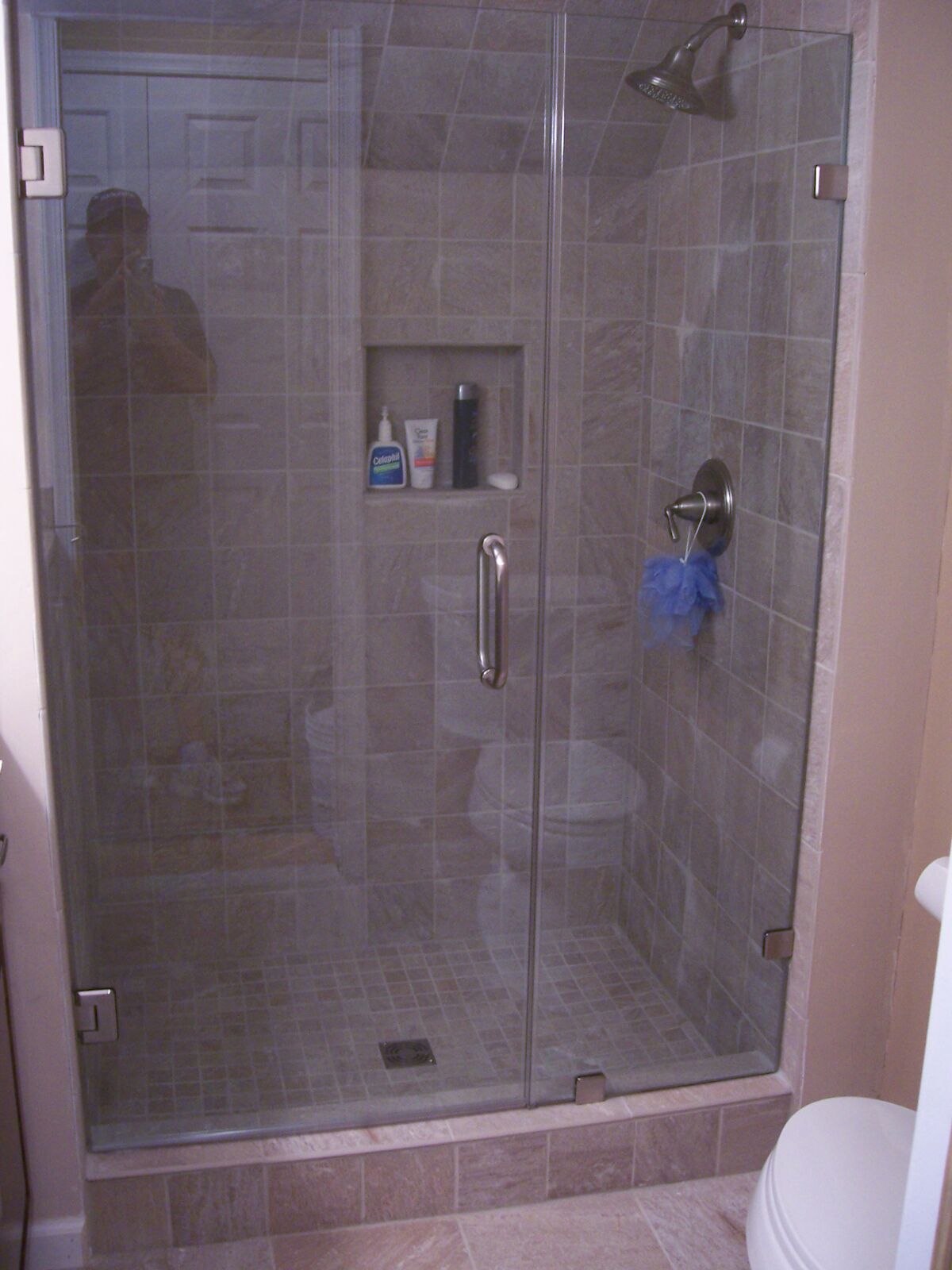
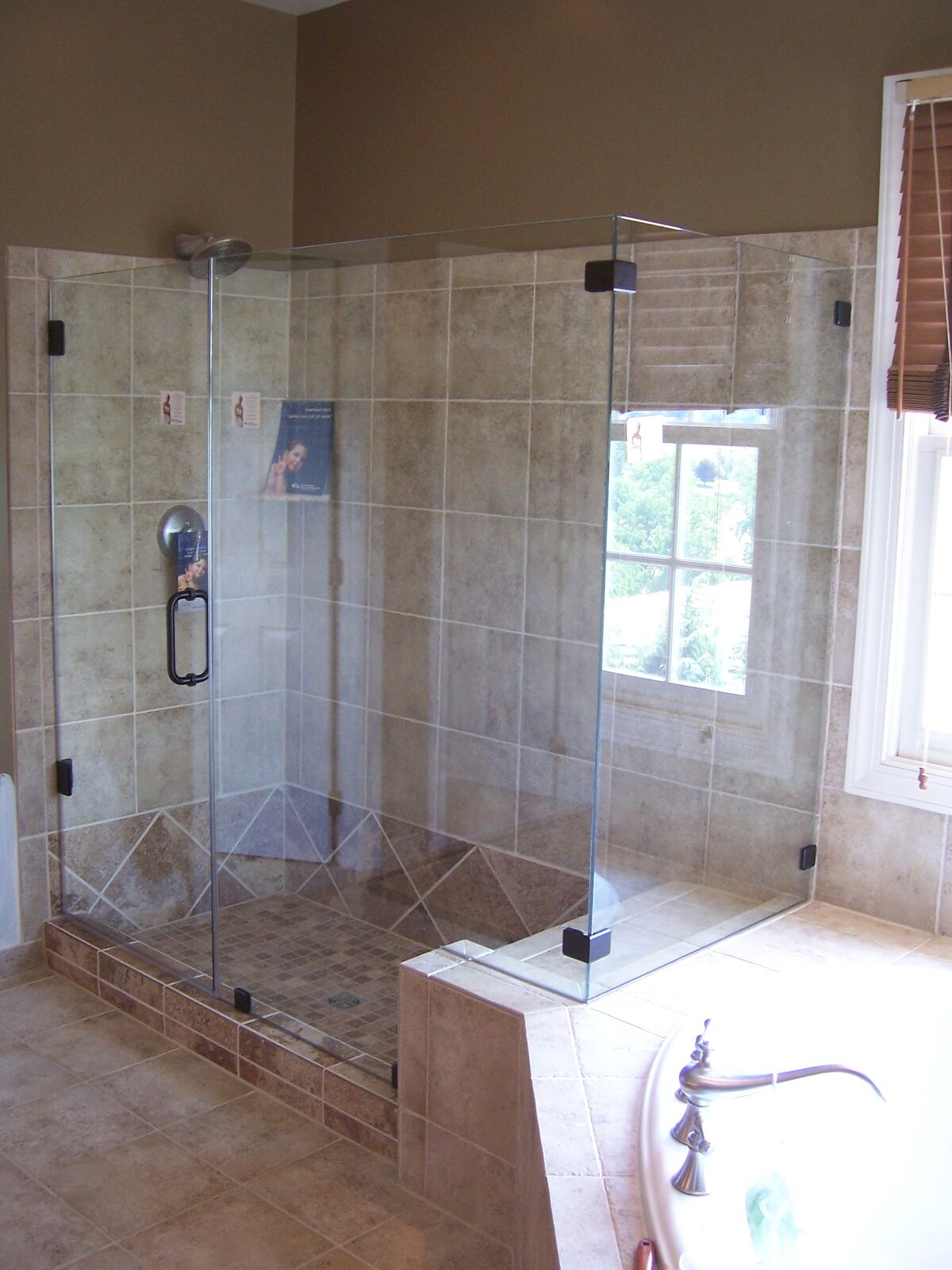
Frameless shower doors
A frameless shower door is thick tempered glass held by hinges and clamps, with no metal frame around the door or panels. Most frameless doors use 3/8-inch glass. Half-inch glass is heavier and feels more solid, and it's common on larger doors.
Why homeowners choose frameless:
- The tile, the fixtures and the space show through.
- There's no metal track or frame to trap soap scum and mildew, so it's the easiest style to clean.
- It's built to your exact opening, so it fits showers with half walls, knee walls, slopes and notches.
What to know: frameless doors cost more than framed or semi-frameless doors because the glass is thicker and the hinges carry the full weight of the door. There are small gaps along the hinge side and at the door edges. A sweep at the bottom and clear seals on the door edges control splash, and pointing the shower head away from the door keeps the floor dry.
Compare options on our frameless shower doors page.
Semi-frameless shower doors
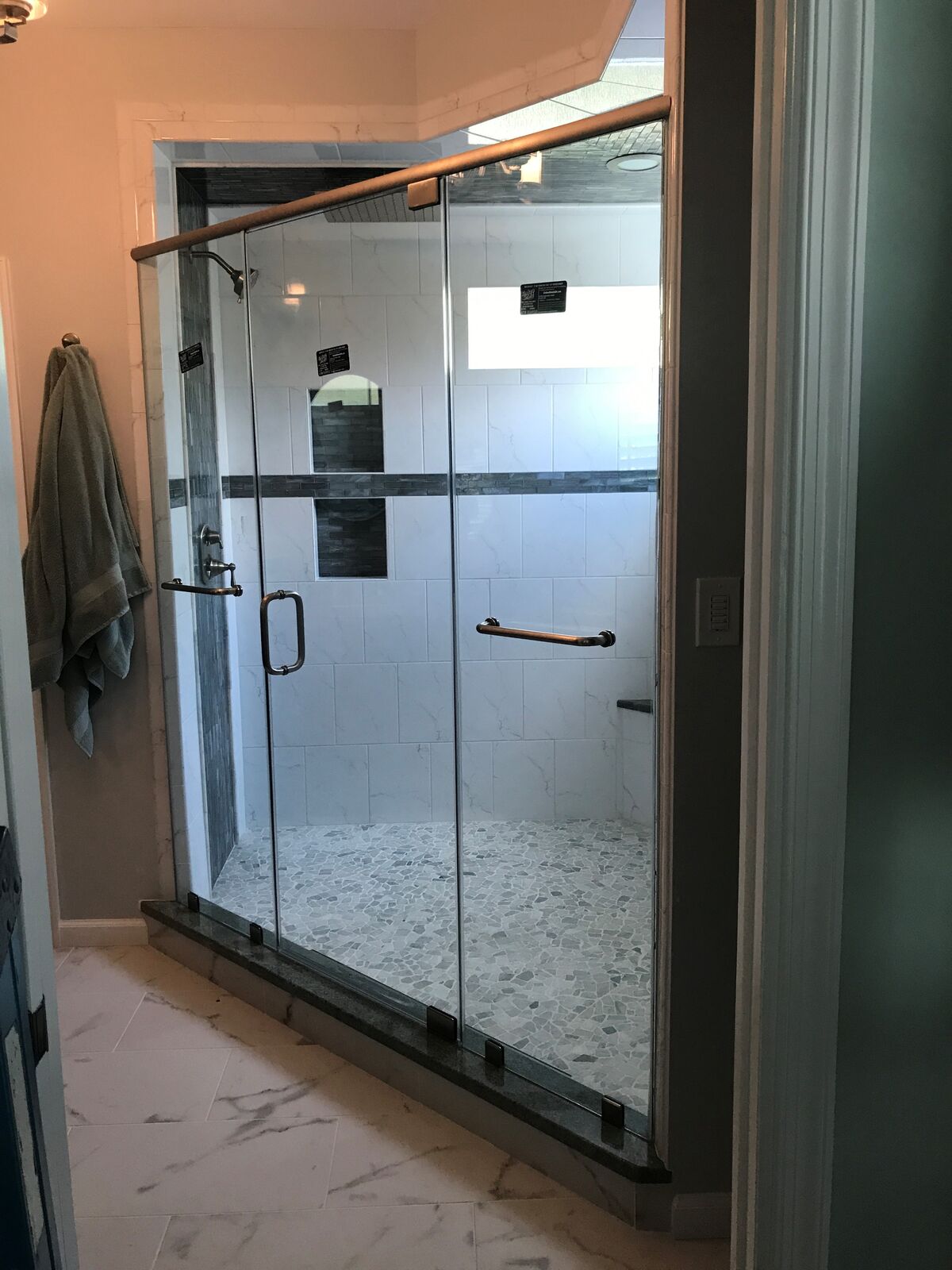
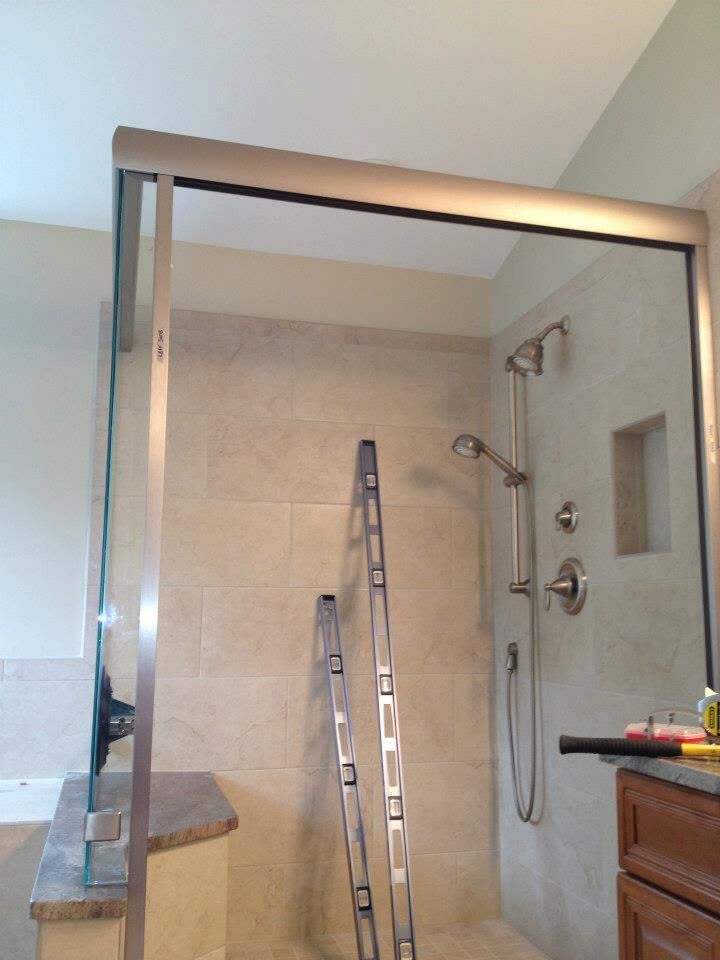
A semi-frameless door has a metal frame around the fixed panels and a header, while the door itself has no frame on its edges. Glass thickness is selected for the particular system. AS&G typically uses 3/8 or 1/2 inch glass for its shower and tub work.
Semi-frameless is the middle ground: a cleaner look than a fully framed door, at a lower price than frameless. It's a good fit for standard alcove showers and for bathrooms where you want some metal trim to match other fixtures.
Framed shower doors
A framed shower door has a metal frame around every panel, and the glass is the thinnest of the three. It's the least expensive style and very sturdy.
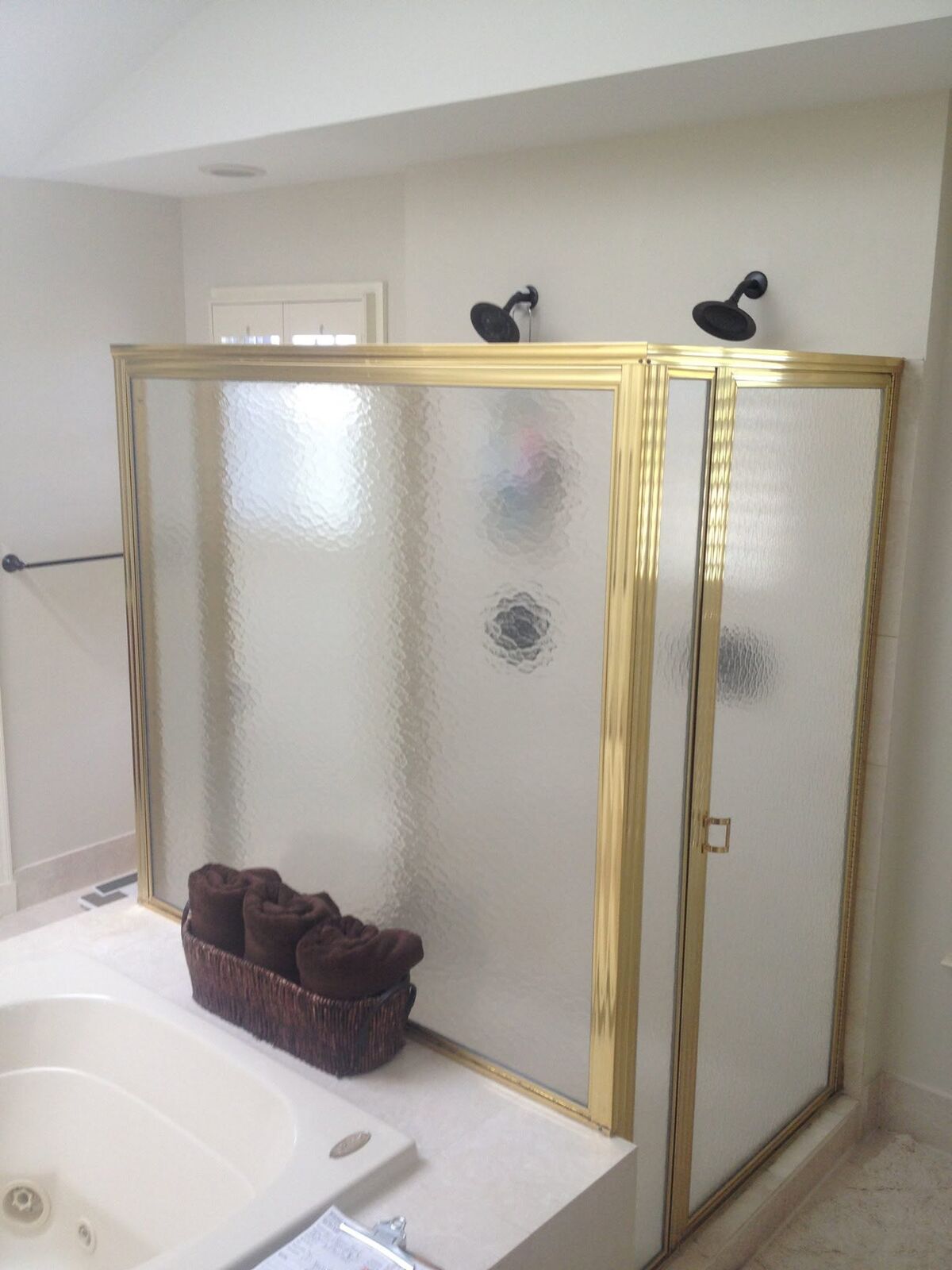
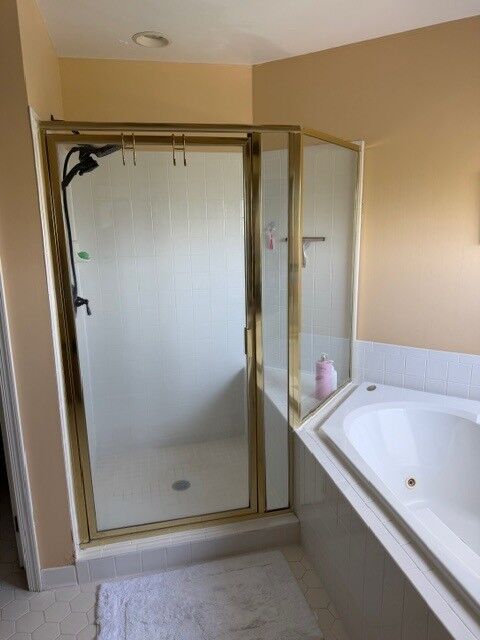
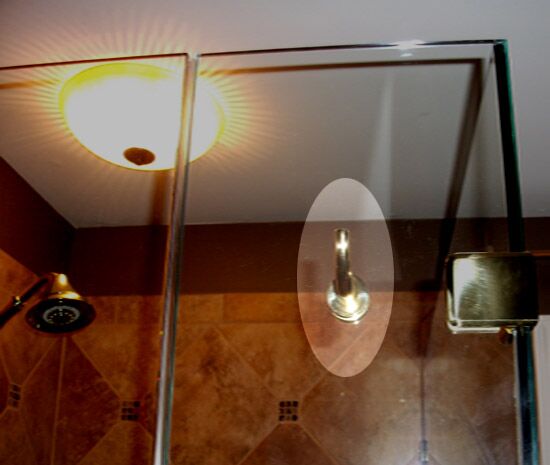
Framed doors were the standard in most homes built before the 2000s, and many of the enclosures we replace today are gold- or brass-framed doors from that era. The frame edges collect water and soap, so they take more cleaning. Framed designs are coming back in matte black, where the frame is the design feature rather than something to hide.
Sliding shower doors
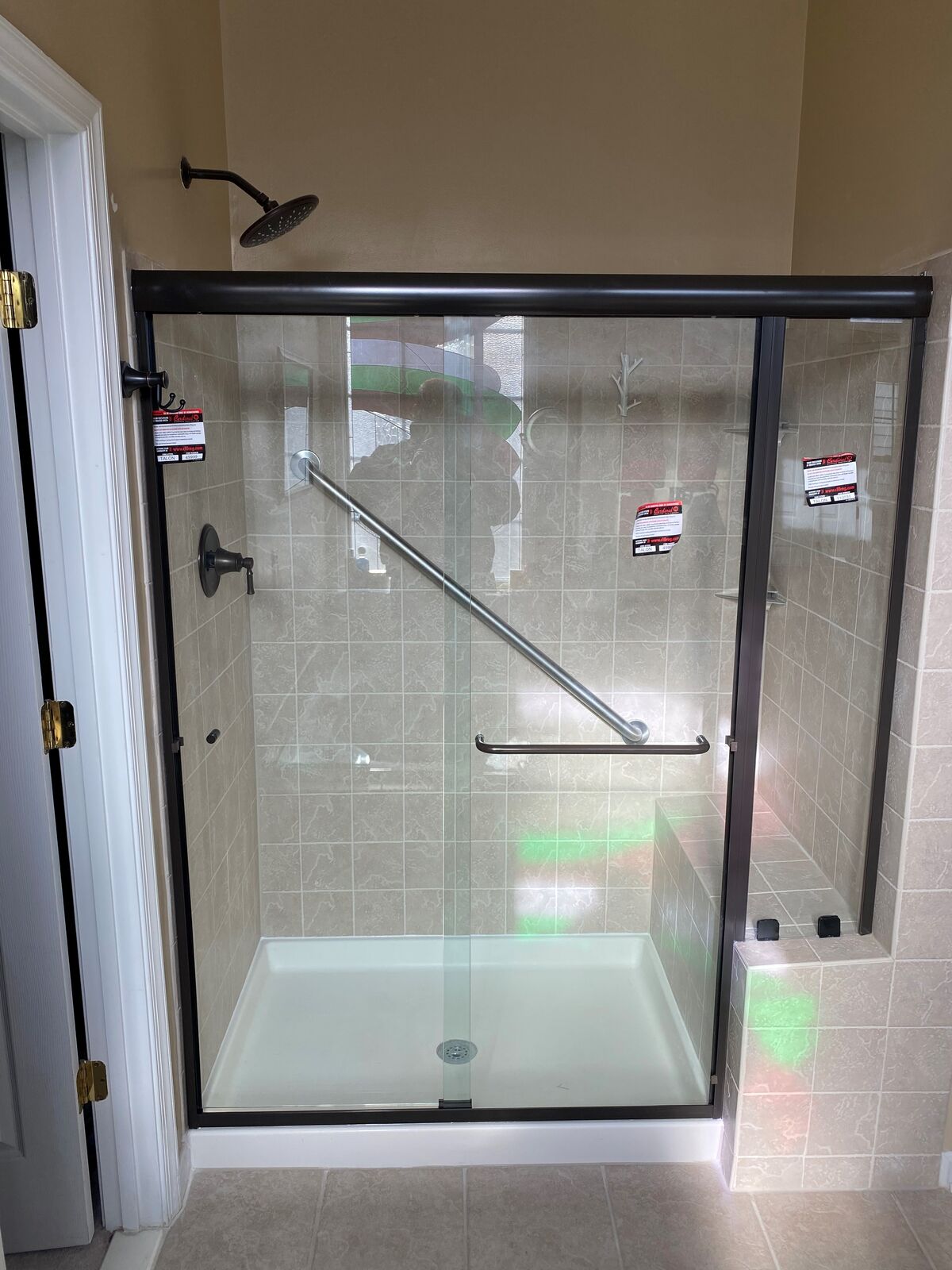
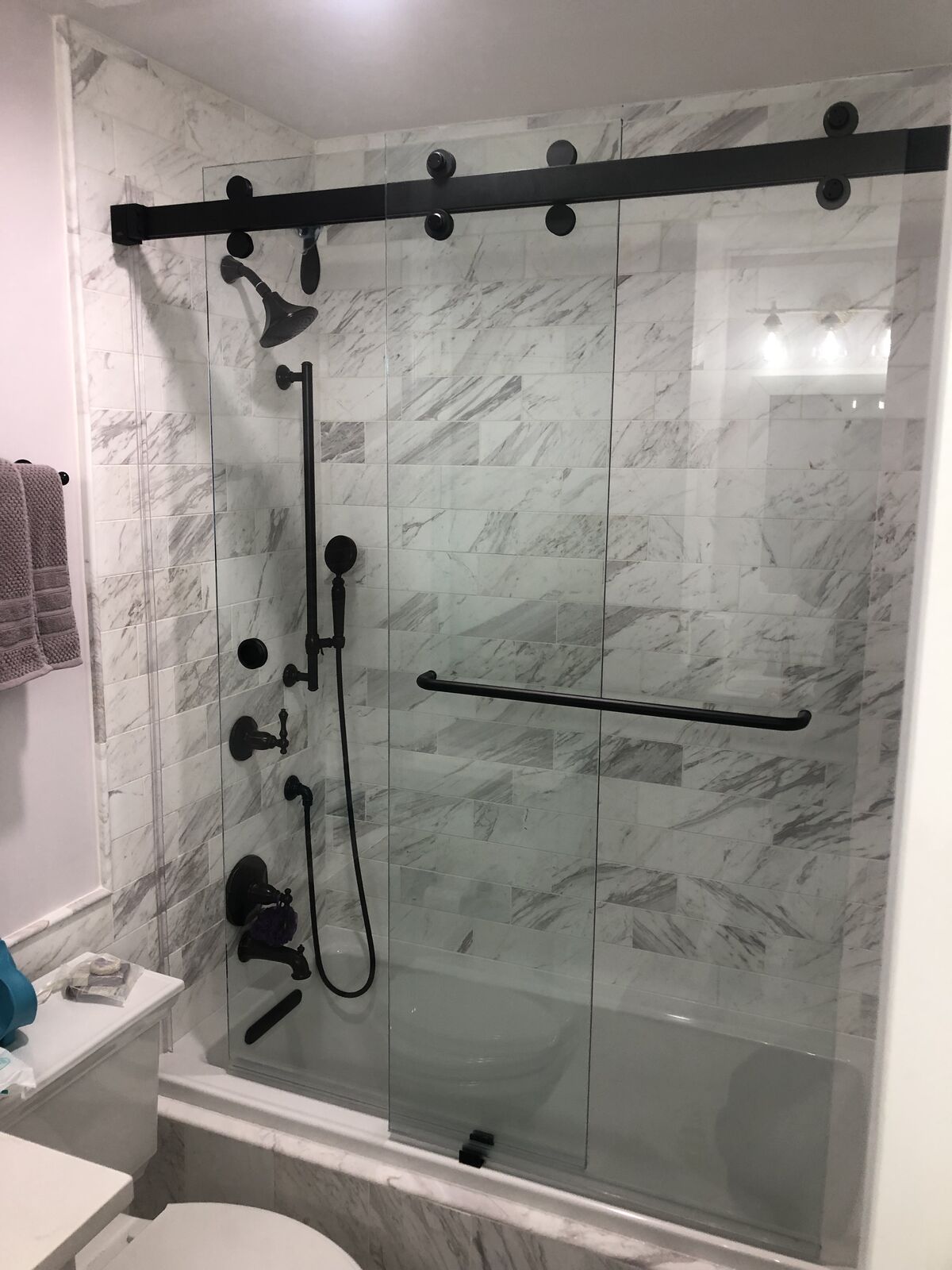
Sliding shower doors (also called bypass doors) have two or more panels that slide past each other on rollers. They don't swing out into the room, so they fit tubs and bathrooms where a hinged door would hit the toilet or vanity.
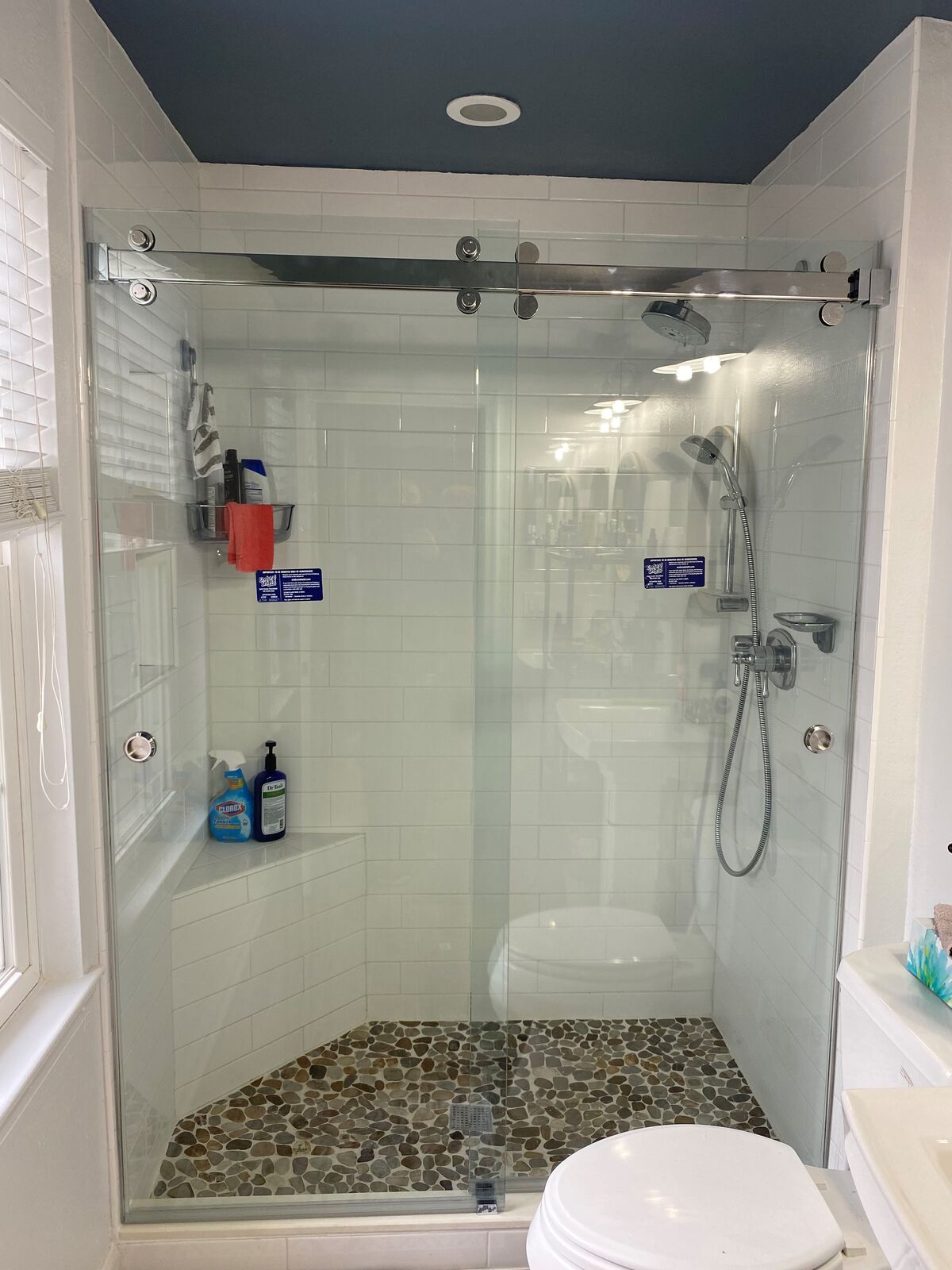
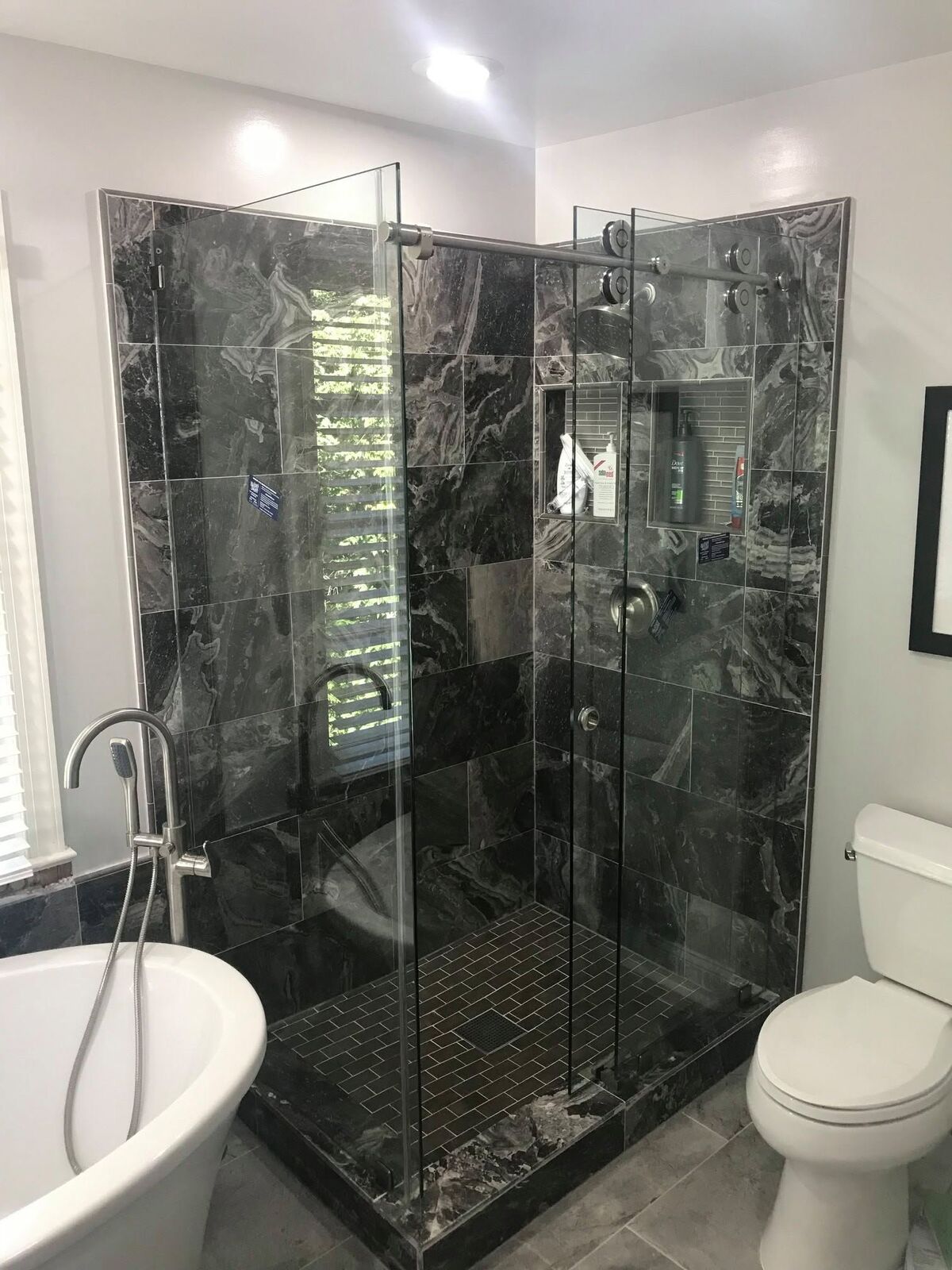
Today's sliding doors use exposed rollers on a top bar, which gives them a frameless look. Choose a design with rollers you can reach and a bottom guide instead of a full bottom track, so there's less to clean.
Sliding shower doors aren't outdated. They're the most practical choice for a tub, and a well-made roller system looks as clean as a frameless door. See sliding shower doors and bathtub glass enclosures.
Shower layouts: inline, corner, neo-angle and steam
The style of door is one choice. The layout of your shower is the other:
- Inline: a door, or a door and a fixed panel, across an alcove.
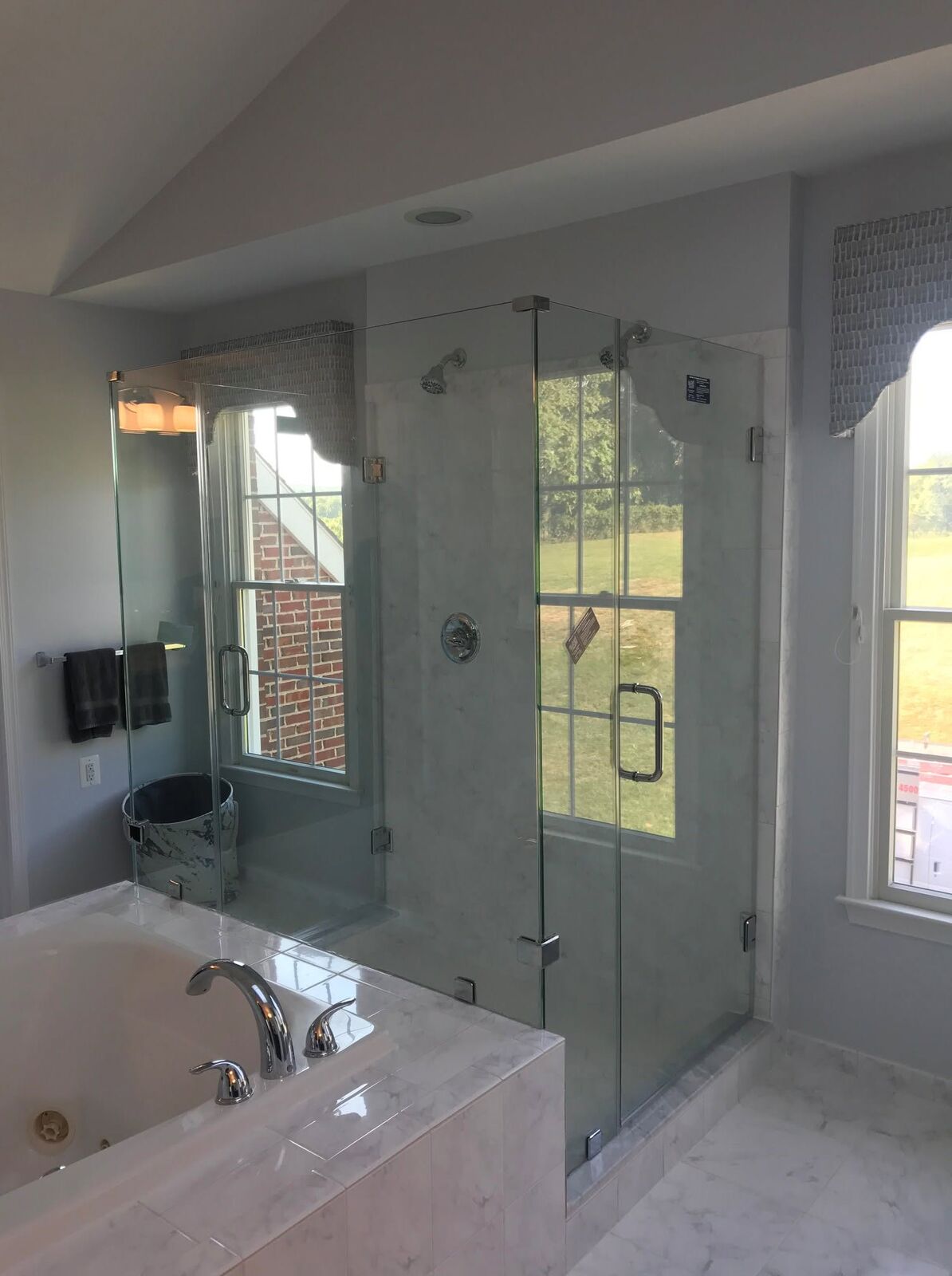
- 90-degree corner: a door and a return panel meeting at a right angle.
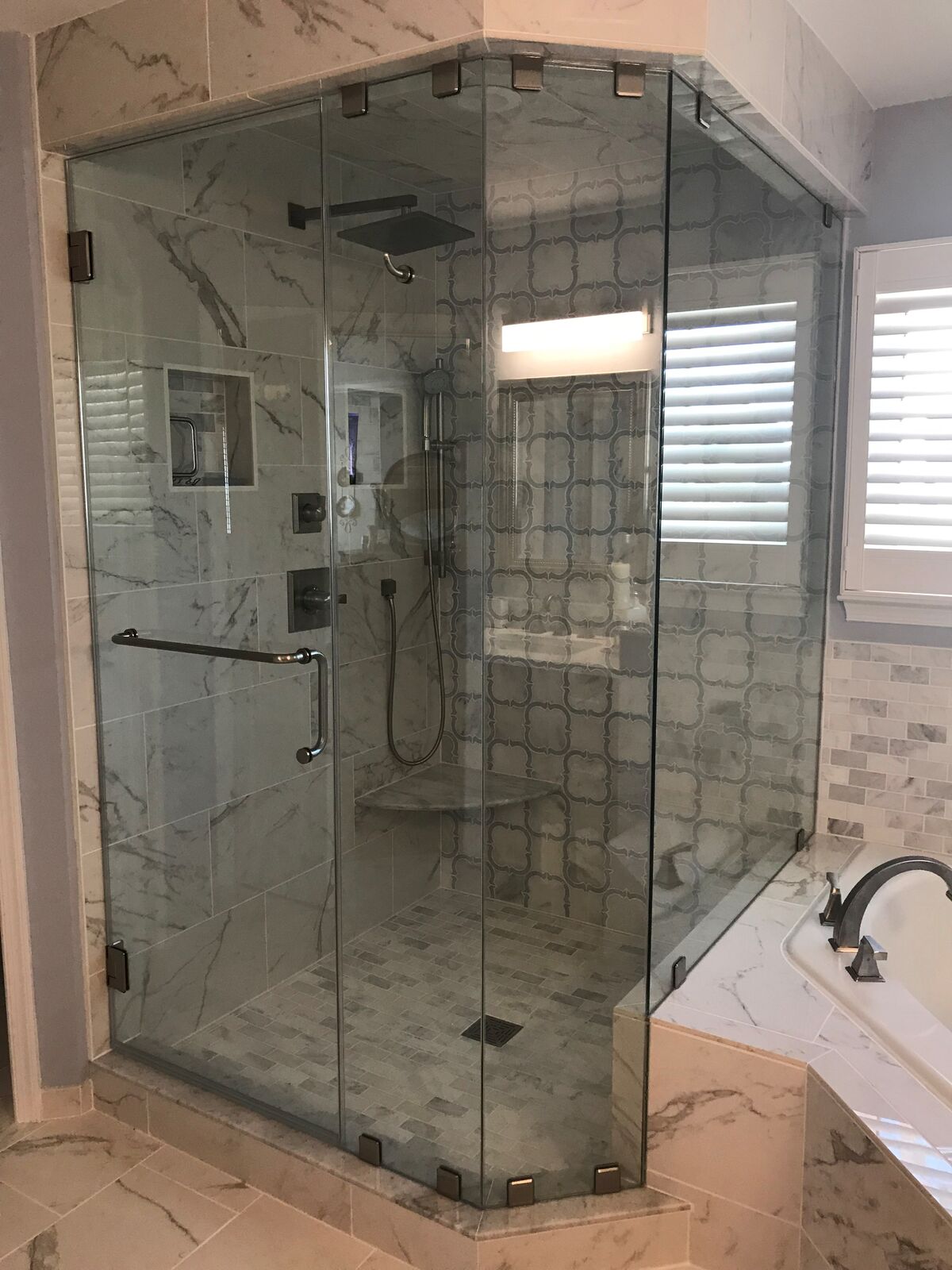
- Neo-angle: three panels in a corner, with the door on the angled face. It saves floor space in smaller bathrooms.
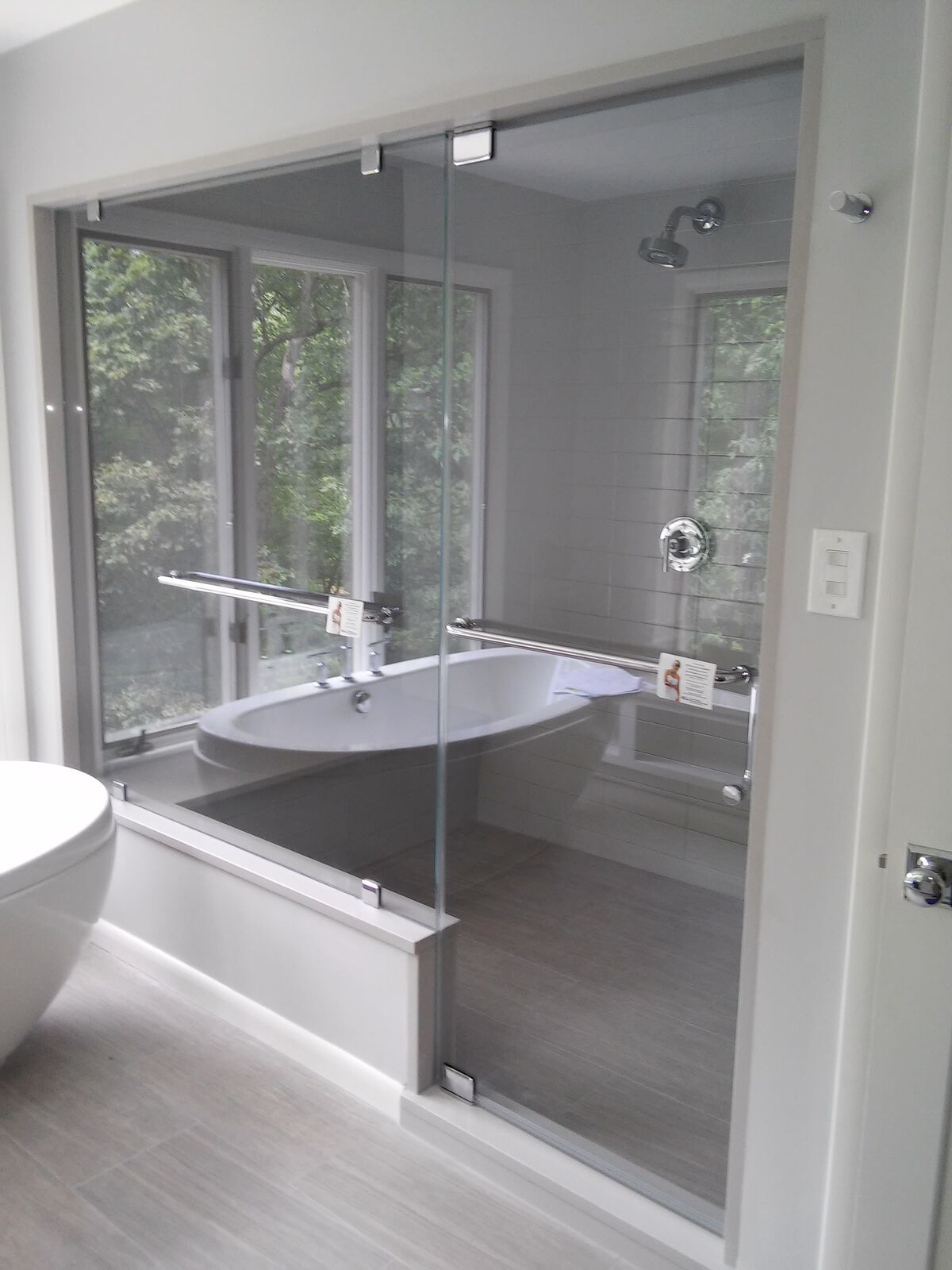
- Steam shower: glass that runs to the ceiling, with a transom panel that opens to let steam out. See steam shower enclosures.
Glass thickness: does it matter?
Yes. Thickness sets how the door feels and what hardware it needs:
- 1/2 inch: the heaviest and most solid. Common on large frameless doors.
- 3/8 inch: the standard for frameless doors and panels.
- 1/4 inch: used in semi-frameless and many sliding systems.
- 3/16 inch: found in framed doors.
Thicker glass costs more, and it needs stronger hinges and wall support. Our technicians confirm the right thickness for your opening before anything is ordered.
Clear, low-iron or frosted glass
- Clear glass is the typical choice. Some clear glass has a faint green tint at the edges, most noticeable in thick glass and against white backgrounds.
- Low-iron glass (sometimes called ultra-clear) removes most of that green, so white and light-colored tile looks truer.
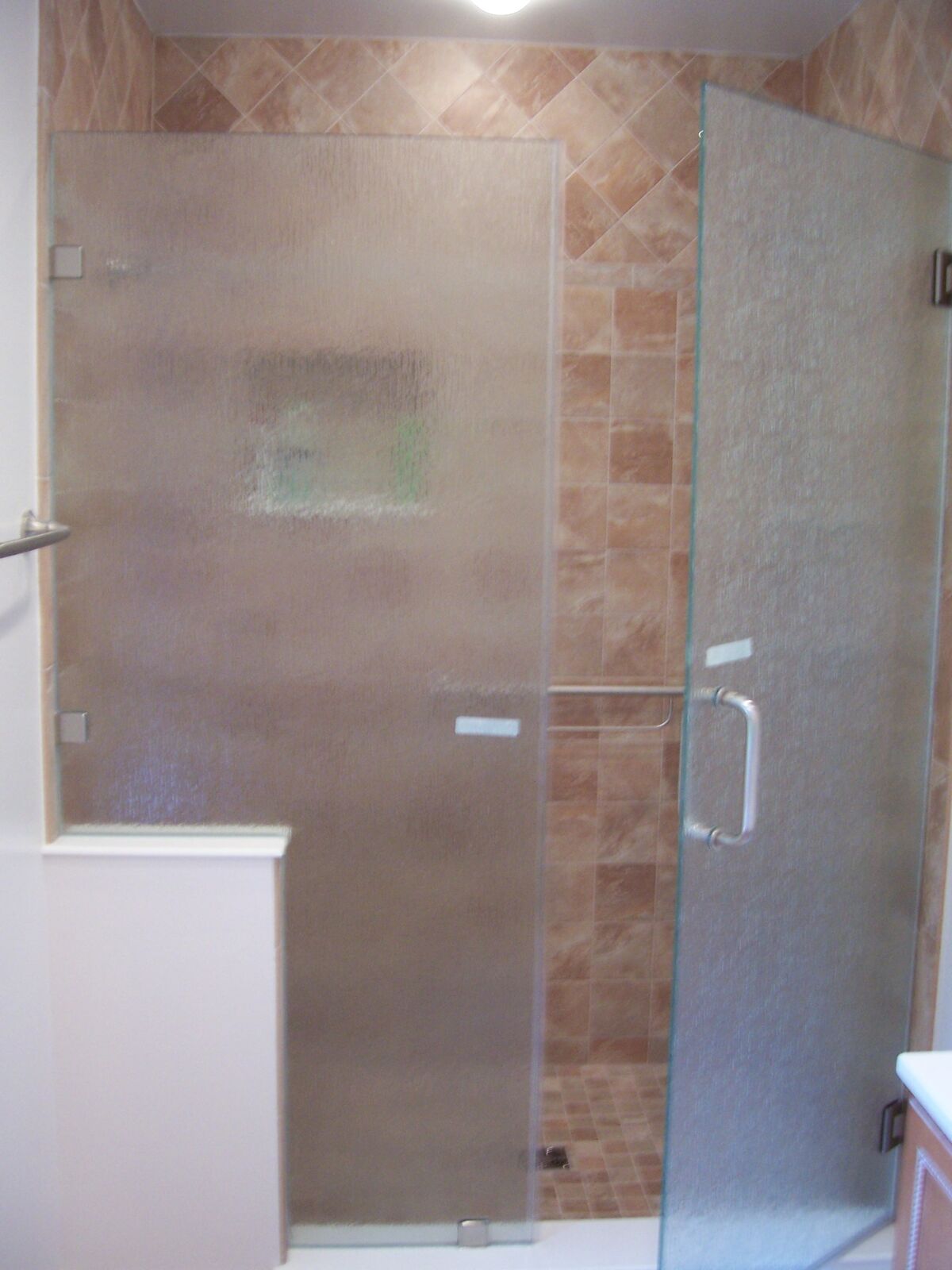
- Frosted or patterned glass adds privacy.
Hardware finishes and details
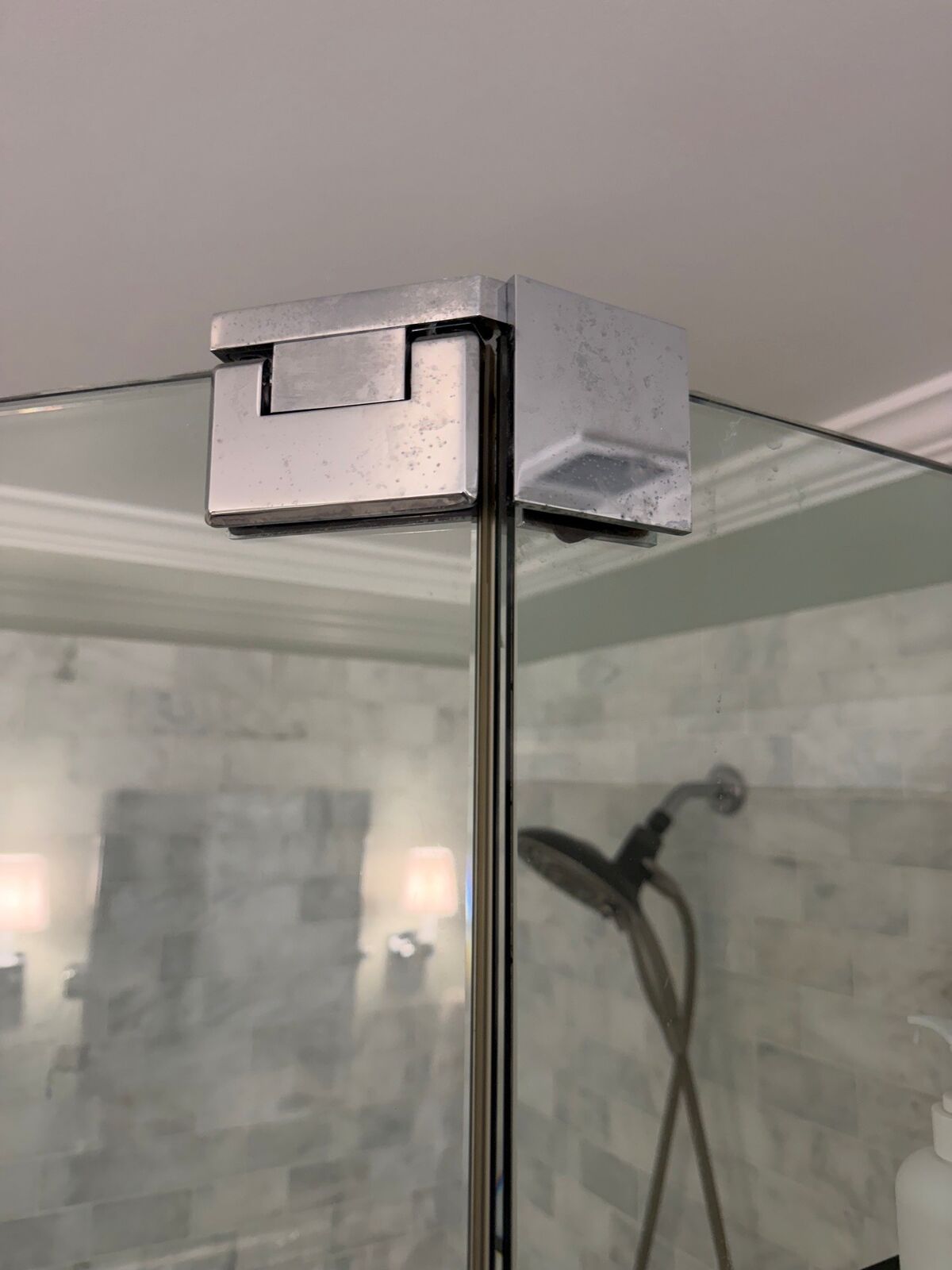
Hinges, handles, clamps and headers come in chrome, brushed nickel, matte black, polished brass, satin brass and oil-rubbed bronze. Match them to your faucet and shower trim.
Small details make a big difference in daily use:
- Hinges carry the door and control how it swings. Most frameless doors swing both ways or outward.
- Clamps hold fixed panels to walls, curbs and each other.
- Towel bars and robe hooks can mount through the glass.
- The curb and threshold set how water stays in the shower. A sloped curb sends water back toward the drain.
Glass surface protective coating
A protective coating seals the surface of the glass so water beads up and runs off, and soap and hard-water spots don't bond to it. It makes daily cleaning faster. We include a glass surface protective coating on every shower enclosure we install.
Why we measure after the tile is done
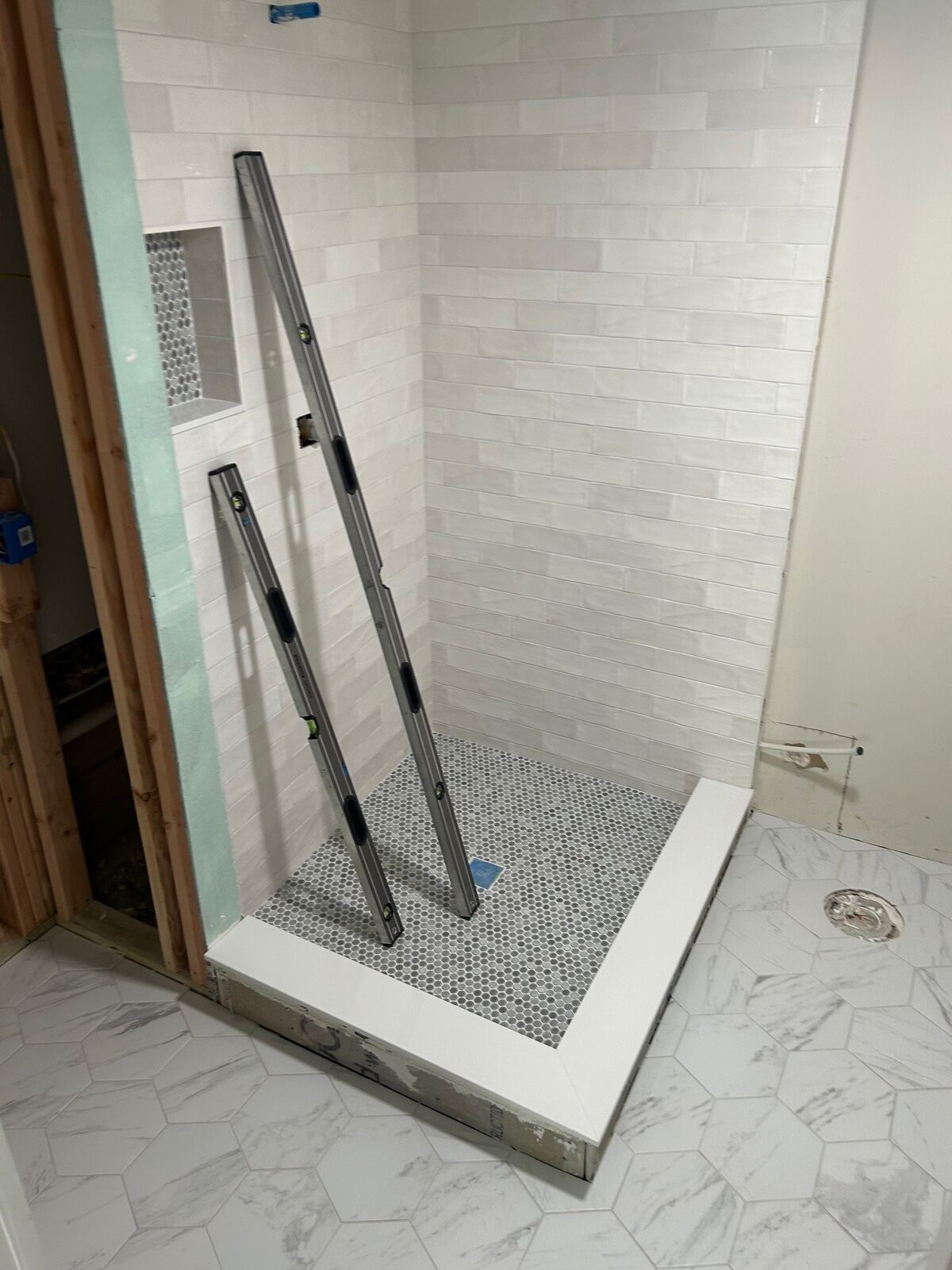
Frameless glass is manufactured to the exact size, within fractions of an inch. Tile, stone and backer board change the size of the opening, so we take the final measurement after all tile and stone work is complete. If you're in the middle of a remodel, book the consultation early, and we'll schedule the final measure for when your tile setter is done.
How to choose the right glass shower door
- Measure the space around the shower. Check how far a door can swing before it hits the toilet, vanity or towel bar. If it can't swing, plan on a sliding door.
- Pick the style. Frameless for the cleanest look and easiest cleaning, semi-frameless for a lower price, sliding for tubs and tight bathrooms.
- Choose the layout. Inline, corner, neo-angle or full height for a steam shower.
- Pick the glass. Clear, low-iron or frosted. All of it is tempered.
- Choose the hardware finish. Match your faucet, shower head and trim.
- Finish the tile. We take the final measurement after all tile and stone work is complete.
- Book a consultation. Send photos through our free estimate form to start.
Get a free estimate on a custom shower door
American Screen & Glass has installed custom shower enclosures throughout Northern Virginia. We serve all of Northern Virginia, including Fairfax County, Loudoun County, Arlington County, Alexandria and parts of Prince William County.
See all our shower enclosures and custom shower enclosures, or request a free estimate.
Frequently asked questions
Do you handle a full tub-to-shower conversion?
We handle the glass portion of the project. We work with bathroom-remodeling partners and can coordinate the glass with the rest of your remodel; we do not perform the full bathroom conversion.
What happens to old screw holes when an enclosure is replaced?
New fixings may be needed, especially where old screws are rusty. New clips or hinges can often cover previous holes, but removal or drilling can damage tile. We assess the opening and discuss visible holes and finish work before installation.
What's the difference between frameless and semi-frameless shower doors?
A frameless door is thick glass (3/8" or 1/2") held only by hinges and clamps. A semi-frameless door has a metal frame on the fixed panels and header, with thinner glass, usually 1/4". Frameless looks cleaner and is easier to clean. Semi-frameless costs less.
Are frameless shower doors worth it?
For most walk-in showers, yes. They're the easiest to keep clean, they show off your tile, and they're built to fit your exact opening. They cost more than framed or semi-frameless doors, so for a tub or a tight budget, a sliding door is the better value.
Are frameless shower doors more expensive?
Yes. The glass is thicker and the hardware is heavier, so frameless costs more than semi-frameless or framed doors of the same size. Your estimate shows the price of each option so you can compare. Try our cost calculator for a ballpark.
Do frameless shower doors leak?
A frameless door has small gaps at the hinges and along the edges. Clear seals and a bottom sweep control splash, and aiming the shower head away from the door keeps water in. If you want a fully sealed enclosure, that's a steam shower.
Are sliding shower doors better than hinged doors?
They're better for tubs and for bathrooms where a door can't swing out. A hinged door is better for walk-in showers where you want a wide, open entry. Modern roller systems give sliding doors a frameless look.
Are glass shower doors tempered?
Yes. We use tempered safety glass for the shower enclosures we install. It is designed to break into small fragments, but broken glass can still cause injury. Our technicians confirm the glass specification for the enclosure.
Can glass shower doors break on their own?
It's rare. Tempered glass is strong, but a chip on the edge, a hinge that's out of adjustment or a hard knock against tile can weaken it over time. Proper installation, with the glass never touching tile or metal directly, prevents most of this.
Does shower door glass thickness matter?
Yes. Thicker glass feels more solid and is used for frameless doors. 3/8" is the standard for frameless, 1/2" is the premium choice for larger doors, and 1/4" is common in semi-frameless and sliding doors.
How do you keep glass shower doors clean?
Squeegee the glass after each shower and wipe it with a non-abrasive cleaner once a week. Protective coating, which we include on every shower enclosure we install, keeps spots from bonding to the glass so this takes seconds.
When should I book my shower glass if I'm remodeling?
Book the consultation early to choose your style and hardware. We take the final measurement after tile is complete, then the glass is manufactured to the exact size.